Prototype Classification Guide
Prototypes: As a category
Strong prototypes are the most coveted pieces in the beanie hobby. They’re a looking glass with which collectors can peer into Ty’s mind and glimpse what might have been and what never came to pass. As pieces they embody excitement, danger, mystery, anxiety, rarity, and sophistication. A collection with strong prototypes is instantly catapulted to the upper echelons of the hobby. Collectors chase specific prototypes for years – decades! Then once secured, fold these pieces away into “black hole” collections where they often remain indefinitely.
How do these ranks compare with production ranks and rarity?
It is tough to compare the rarity of a prototype to a production piece. They aren’t apples to apples. Production pieces are much more generally collected by the beanie community, while many bypass prototypes entirely given their scarcity, price, and ‘non mainstream’ place in the hobby. Other collectors see prototypes as the ultimate rung on the beanie ladder. As of now, the rarity ranks assigned to a prototype should not be compared with a rank given to a production piece. A “0” rank prototype may not be valued similarly to or deemed to hold the same rarity as a “0’ ranked embroidered or first generation piece.
What IS a prototype? Where did they come from?
Prototypes are unreleased (for retail sale) pieces for a released style at some stage of development, or may be a prototype design for an entirely unreleased style. Ty spent years perfecting a design before he released it to the public. While prototypes were never released to the public, Ty often gave them to employees as gifts, or to sales reps to share with retailers.
Do prototypes have tags? Which? Does condition matter?
Typically, yes! A higher quality prototype began its journey with a special prototype tag. But in many cases, these tags were removed from a piece if it was displayed (at a Ty-Riffic Store, for example), given away as a gift to an employee, or if passed along to a sales rep to share with retail customers. It is believed Ty did this to keep his factories/manufacturing details private. Therefore, a prototype with a ‘MWMT’ prototype tag is the most desirable, but there are many pieces with no prototype hang tag (or tush tag) with minimal impact to their value. Condition – always nice to find a tag in MWMT condition, but a bend or crease does not impact the value of a prototype the way it would the value of a production piece with similar hang tag damage. Earlier prototypes have a “pax” hang tag and/or “pax” tush tag (or neither). Prototypes after around 2001 will have “advent” prototype hang and tush tags, or a square “ty” signed prototype tag. There are a few other rare variation pax tags as well, but the circular pax and advent tags cover about 95% of prototypes spanning from 1992 – 2008. The square ty prototype tags were mostly limited to rare production teddy lines (billionaires, hong kong, etc).
Prototype rarity further explained
All prototypes are exceedingly rare and typically unique. But there is a wide gap between less ‘rare’ prototypes and the most desired examples. This ranking classification guide assigns a “rarity” rank to a prototype that is dictated by several factors: age (is this a prototype for a 1st generation piece, or a 5th generation piece), departure strength (is this piece a fully alternate color, or perhaps just has a slightly lighter eye shade, or an entirely unproduced style?), condition (does this piece have pax tags?), style (is this a prototype for Humphrey, or for Claude the crab?), and notoriety (how well known is this piece? Tyriffic? Press? Etc.).
A piece’s rarity rank and its price are almost always correlated. We have refrained from putting specific values on pieces in this blog because these exchange hands so infrequently/privately, that it is impossible to establish a ‘market value’ for them. Additionally, if a bidding war erupts, the price for a piece goes through the roof. Also, prototype preference at a certain level is subjective. One piece may be a collector’s literal dream piece, while to another collector, that piece may simply not be to their personal liking. But generally speaking, the cheapest prototypes go for a few hundred dollars, the most expensive can reach many thousands of dollars.
Prototype style production roadmap
A style entered a prototype state years before its production version was released to the public. For the original 9, we have seen prototypes with pax dates from as early as ~mid 1992, with their finalized design released to the public in early 1994. This set the benchmarked ~18-24 months design cycle for a style from inception to launch. The strongest departures from a style’s eventual production were almost always seen in the earliest stages of that prototype’s design process (when their concept was most ‘rough’). The closer to a piece’s release date, the more a piece came to resemble the final released design in both pattern and color. Ty did like to play around with fun prototype alterations closer/shortly after a piece’s release, but these designs were usually his preparation ahead of a style change (Inky from tan to pink etc.).
Prototype progression example: Patti prototype
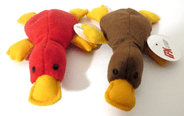

Deep Fuchsia/white:
Pax tag dates: 8.28.92

Pax tag dates: ~1993
Prototype Rarity Ranks *Note: these ranks have been created to loosely guide collectors through ‘least’ rare and valuable to ‘most’ rare and valuable prototypes. Also, the standing of some pieces shifts over time – a rank 0 piece could become a rank -.5 piece as more/no additional prototypes surface.
Quick Chart:
| Rarity Rank | Description | Examples |
| -1 | The most coveted pieces in the hobby. | Full Alternate Chef Bear |
| 0/-.5 | Oldest style prototype or most limited exclusive. Fully tagged. Crazy prototype version for an incredible style. FULL alternate. | Red Brownie, Blue Tyriffic Nana, etc. |
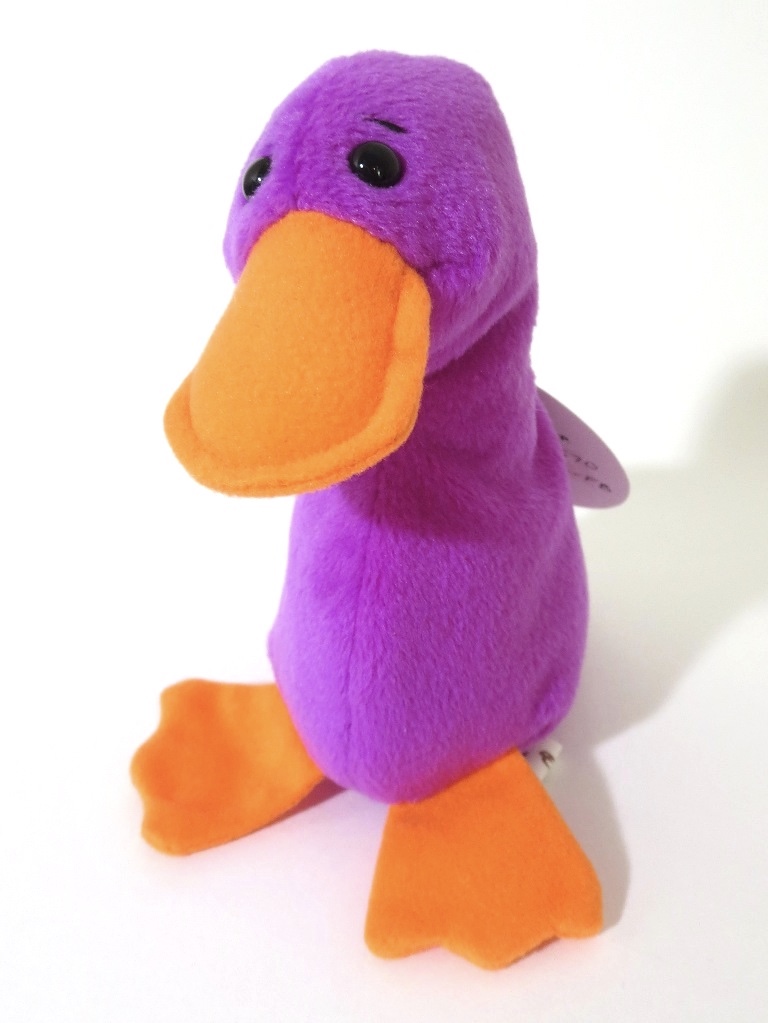
| 0.25 | Oldest style prototype or most limited exclusive. Fully tagged. Just not quite the craziest prototype variation that could exist for that style. Not fully alternate. But close. | Wingless Quackers, green bill. |
| 0.5 | A notch below “0.25”. An INSANE example of killer/exclusive style that isn’t the rarest style. Or a variation a bit below .25 of the rarest style. Extremity alternate (feet, ears, etc) for the earliest styles. | Pinchers, white belly |
| 0.75 | Minor variation for one of the oldest pieces. WILD variation for a weaker, older piece. | Flash, red belly. Tyriffic yellow Lucky |
| 1 | A killer variation for an OLD/Iconic style, or a basic variation for a super old style. Or a strong example of an exclusive style. | Humphrey red belly. Tyriffic blue bessie |
| 1.25 | An almost killer variation for an OLD/Iconic style, or not quite the most insane variation for a super old/iconic style. Or a strong example of an exclusive style. | New Face Brown teddy with patch |
| 1.5 | An insane/killer variation for an old style that isn’t the most iconic. Or a super iconic piece that isn’t a magnificent variation. | Inky with mouth white and tan |
| 1.75 | A strong variation for an old style that isn’t the most iconic. Or a super iconic piece that is a solid variation. A weaker variation for an old release. | Bronty, white belly |
| 2 | A decent variation for an old piece. | Chops, pink face. |
| 2.25 | An iconic style, old, but not the strongest variation. Or a strong/incredible variation on a slightly newer vintage piece. | Happy lavender, white ears |
| 2.5 | A less iconic vintage style, old, but weaker variation. Or a decent variation on a slightly newer vintage piece. | Red and brown Bucky |
| 2.75 | A strong variation for a newer vintage piece. Or a decent variation for an iconic newer vintage piece. | Red Holiday 1997 teddy |
| 3 | A weak variation for an iconic newer vintage piece. Newer old piece, or slightly newer piece. | Spike gray and orange |
| 3.25 | A decent variation for a less iconic newer vintage piece. Strong variation for a post 1998 piece | The End- with patch |
| 3.5 | Strongest variation for a newer notable piece. A minor variation for a newer vintage piece. | Echo tie-dyed belly |
| 3.75 | A weak variation for a newer vintage piece. A strong variation for a newer memorable piece. | Ants, red stripe. |
| 4 | A strong variation for a new piece, or the weakest/sample variation for a mid age/newer style. | Lucy, dark gray body |
| 5 | A weak variation for a newer piece. | Prickles, no departure. Pax tush |
“-1” Rank.
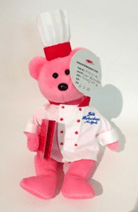
This is a newly created rank assigned to separate out the most valuable and coveted pieces in the hobby. These pieces represent the wildest departures of THE most coveted pieces in the beanie hobby. Prototype items in this category would include a fully alternate colored chef bear prototype. These pieces are perhaps not any crazier than a “0 rank” piece, but the style itself is the most appreciated within the hobby.

“0” and “-.5” Rank.
There are very few true zero rank prototype pieces out there (and -.5). These pieces are the absolute pinnacles of the hobby. They are crazy variations of the oldest or most coveted styles. Finding mint production examples of these pieces is a challenge in and of itself. Now imagine extravagant prototype designs of these pieces. This rank is typically limited to 1st generation released pieces (1994 and 1994 mid-year releases). Exceptions include wild tyriffic (or otherwise famous) pieces of exceptional styles, exclusive ty employee/exclusive released pieces, or wild variations for other early, coveted styles. Zero rank pieces also usually (but not always) come complete with all mint pax tags and have the very earliest 1992 pax dates.

Original 9 Brownie/Cubbie: bright red body and brown snout. 5.11.92 pax tags
This is a fully alternate WILD variation original 9 piece. All pax tags + incredible 1992 pax dates. More iconic original 9 piece.
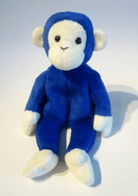
Tyriffic Nana Blue And Cream. No Pax tags
This is a WILD variation for one of the earliest, most famous pieces. While a 3rd generation, Nana is considered one of the rarest production pieces. This is also a famous Tyriffic Chicago piece.

#1 Rep Bear red with white ears, feet, ribbon, nose. Signed by ty. Pax date: 8.2.98
A strong variation for one of the rarest pieces, and most exclusive in the employee release line. Some collectors value this type of prototype above all else. Others value the more vintage pieces higher. So this rank could be zero to 1.5.
“0.25” Rank.
These pieces are a notch below “0” ranked pieces. They are either less wild variations of the same pieces, or styles that are mildly less coveted (but still very sought after). These may be valued as highly, or viewed to be as rare as 0, or even -1 ranked pieces. They are not quite as crazy as the wildest surviving examples for their respective style, but they are still wonders to behold.

Wingless Quackers: “Quacks”: green feet and beak. 7.17.93 pax tags
This is a wild variation for one of the earliest, most famous and rarest variation pieces.
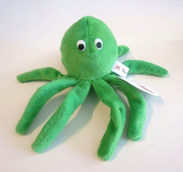
Inky No Mouth: Solid Green. 12.1.92 pax tags
This is a fully alternate WILD mid-1994 release. All pax tags + incredible 1992 pax dates. Level of variation is incredible. Very rare early style piece: no mouth Inky.
“0.5-0.75” Rank.
These pieces fall just very slightly below the “0.25” rank primarily because the departure variation is a bit more modest for the oldest of pieces, or the style is less coveted. These can also be very strong, wild variation for some of the oldest styles that aren’t the most coveted. Think a red Daisy (0.5 rank), versus a green inky with no mouth (0.25 rank). Also potentially valued at the 0 and .25 rank levels.
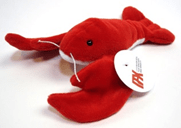
Original 9 Pinchers/Punchers: Red and White Body. 8.22.92 pax tags
This is an alternate color original 9 piece. All pax tags + incredible 1992 pax dates. More iconic original 9 piece, but slightly moderate variation.

Original 9 Flash: Grey body, red fins and belly. 9.21.92 pax tags and Splash (black and red).
These are alternate color original 9 pieces. Both ave pax tags with incredible 1992 pax dates. These are the least iconic original 9 pieces, with solid moderate prototype variation here. Many do still place a premium/rank “0′ on items like this given they are true departure original 9 pieces.

Lucky: Solid yellow. No tags. Tyriffic Chicago piece
This is a fully alternate WILD mid-1994 release. No pax tags, but made famous by Tyriffic Chicago store. Semi-rare early style piece: felt dot lucky
“1/1.25” Rank.
This ranking category consists mostly of moderate mid-1994 variations for rarest styles and wild variations for the rarest styles released in 1995 and mid-1995. Also included are less rare employee exclusive styles/less wild employee departures. Again – at these uppermost tiers, much of this is quite subjective.

Humphrey: gold and red belly + legs. 6.17.93 pax tags
This is a moderate variation for one of the rarest and most coveted styles.

Bessie: solid blue. 1.17.94 pax. Tyriffic Chicago Store.
This is a WILD and famous variations for a mid-Year 1995 release.
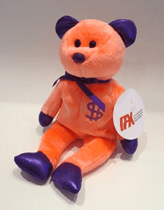
Billionaire 3: Purple ears, paws, feet, purple ribbon
A crazy true prototype for the employee exclusive Billionaire 3.
“1.5” Rank.
These pieces consist of strong variations for rarer 1995 style releases, and wild variations for the rarest mid-1995 releases.
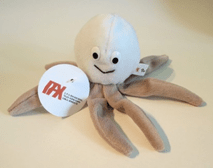
Inky tan with mouth: white head. 1.17.93 pax.
This is a strong variation for the tan inky. Late 1994/Early 1995 style
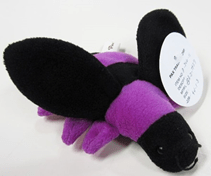
Bumble the bee: magenta. 1.9.94 pax.
This is a wild variation for the mid-1995 released bee.

Nip the cat: all gold. 11.16.93 pax.
This is a mild variation for one of the rarest 1995 released styles.
“1.75” Rank.
These pieces consist of mild mid-1995 variations for rarest styles; strong mid-1995 variations for common styles, wild variations for rarer 1996 styles, and a few wild variations for iconic, famous 1997 styles.

Bronty: white belly. 1.9.94 pax.
This is a mild variation for one of the rarest mid-1995 released styles.
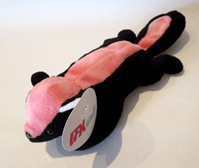
Stinky: red body. 12.14.94 pax.
This is a strong variation for a common mid-1995 released style.

Garcia: solid white body. 7.12.95 pax.
This is a wild variation for a rare mid-1996 released style.
“2.00” Rank.
These pieces consist of mild mid-1995 variations for common styles; strong variations for rarer 1996 styles, wild variations for common 1996 styles and rarer mid-1996 releases.
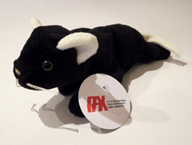
Velvet: black and cream. 12.18.94 pax.
This is a mild variation for a more common mid-1995 released style.

Chops: pink and cream. 12.16.94 pax.
This is a strong variation for a rarer 1996 released style.

Ringo: brown and green. 12.27.94 pax.
This is a wild variation for a more common 1996 released style.
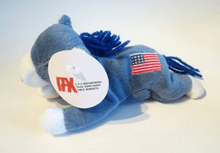
Lefty: white and blue. 12.7.95 pax.
This is a wild variation for a rarer mid-1996 released style.
“2.25/2.5” Rank.
These pieces consist of minor variations for common mid-1995 styles; strong variations for common 1996 styles, mild variations for rarer 1996 styles.
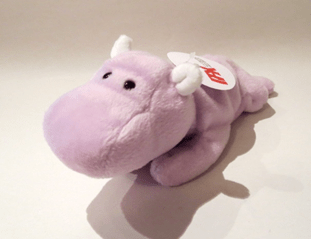
Happy Lavender: white ears. 1.2.94 pax.
This is a moderate variation for a more common mid-1995 released style.
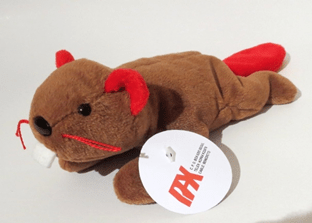
Bucky: red and brown. 12.9.94 pax.
This is a strong variation for a more common 1996 released style.
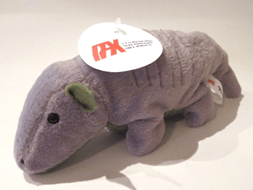
Tank 7 line: gray and green. 12.3.94 pax.
This is a mild variation for a rarer 1996 released style.
“2.75/3” Rank.
These pieces are strong variations for common 1996 styles, and strong variations for rarer 1997 styles.
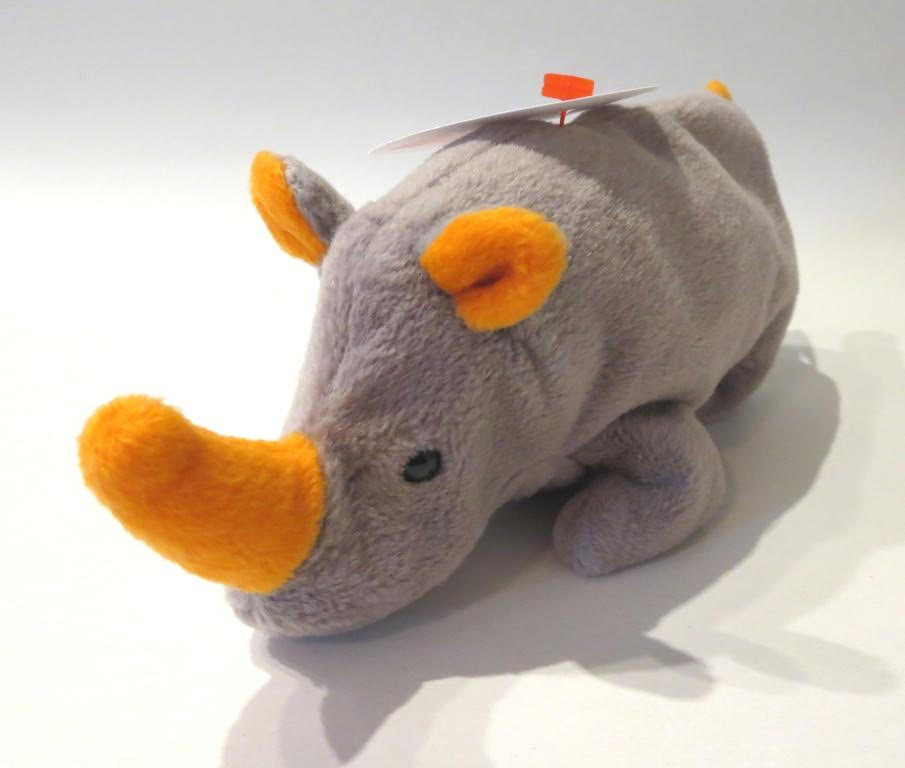

“3.25” Rank.
These pieces are strong variations for 1997 styles or wild variations for 1998+ more popular styles.

1997 Teddy: nappy fur
This is a moderate variation for a rarer 1997 released style.

“3.5/3.75” Rank.
These pieces are mild variations for common 1997 styles or strong variations for 1998+ releases.


“4” Rank.
These pieces are minor variations for early 1998 styles, or moderate variations for late 1998+ styles,.
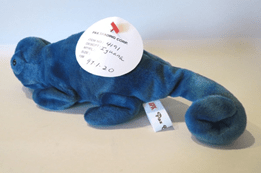
Iggy: no mouth, ridge, etc.
This is a mild variation for a coveted 1998 released style.

“5” Rank.
These pieces are weak variations for 1998+ styles or unproduced styles from 1999+. This category may also include very weak departure prototypes from later years, or newer tier beanies past the 5th generation.
Prickles: pax tush. No noted differences from production
This is a mild variation for a common 1999 released style.
 Rarest Beans